

Table of Contents
- Why a Fishing and Beach Vacation Works for Every Traveler
- Pick a Destination That Balances Fishing and Beach Time
- Choose Beach Accommodation Near Fishing Access
- Saltwater Fishing Gear Essentials for a Coastal Trip
- Coastal Fishing Regulations and Licensing You Need to Know
- Shore Fishing Techniques for Beginners
- Build a Daily Itinerary That Keeps Everyone Happy
- Stay Safe and Leave the Beach Better Than You Found It
- Frequently Asked Questions
Last Updated: October 12, 2026
Why a Fishing and Beach Vacation Works for Every Traveler
A fishing and beach vacation solves a problem most family trips can’t: it gives every traveler a reason to be there. One person casts from the shore at sunrise while another sleeps in, then everyone meets on the sand by lunch. That balance is why this kind of trip keeps growing in popularity. This guide from Qualicum Breeze Resort covers how to plan a beach vacation that works for anglers, kids, and anyone who just wants to relax.
The best fishing and beach trips share one trait: they never force anyone to choose between the two. Plan around that idea and the rest gets easier.
Pick a Destination That Balances Fishing and Beach Time
Start by choosing a place where the water works for both hobbies. That means calm, swimmable shoreline plus real fishing access nearby. A destination with only one or the other will leave half your group bored.
Match the Season to the Species
Fish runs follow a calendar. Some species peak in spring, others in late summer or fall. Ask local guides or tackle shops what’s running during your travel dates. If you’re flexible, shift your trip by a few weeks to hit a stronger season.
Check Access, Tides, and Beach Conditions
Tides change everything. A flat that’s knee-deep at noon can be dry by dinner. Check tide tables before you book, and look at whether the beach is sandy, rocky, or steep. Gentle, sandy entries suit families. Rocky points suit anglers. You can find regional tide predictions through Fisheries and Oceans Canada tide tables.
Choose Beach Accommodation Near Fishing Access
Book lodging within walking distance of the water if you can. A beach rental close to fishing access means less driving, earlier starts, and more spontaneous afternoons on the sand.
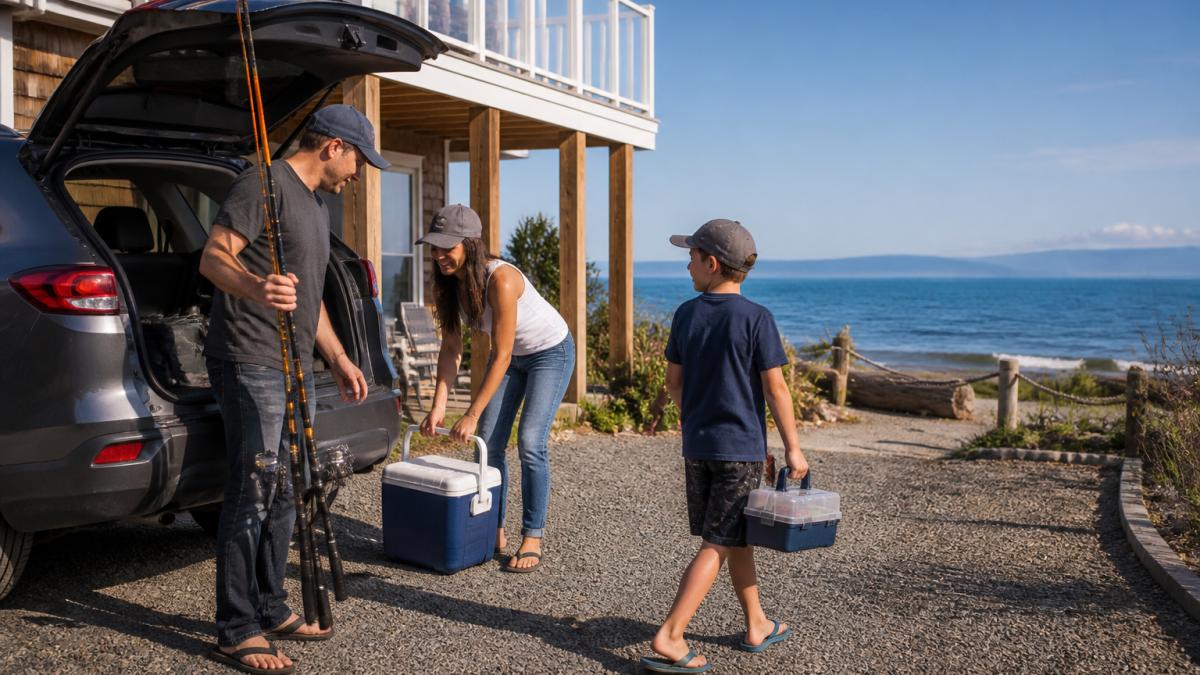
Look for these features when comparing options:
- Direct or short walk to the beach
- Kitchen so you can prep meals and snacks
- Space to rinse and store gear
At Qualicum Breeze Resort, our suites and log homes sit right on the shoreline, with direct beach access and an oceanfront hot tub for the end of the day.
Saltwater Fishing Gear Essentials for a Coastal Trip
Pack light but pack smart. A basic saltwater setup covers most shore fishing, and you can add specialty gear once you know the local water. The trick is matching your rod, line, and terminal tackle to the species and shoreline you’ll actually fish, not to a generic “saltwater” label.
| Item | Why You Need It | Bring or Rent |
|---|---|---|
| Rod and reel | Core setup for casting | Bring if you own one |
| Tackle and bait | Matches local species | Buy locally |
| Bait bucket and aerator | Keeps bait alive | Rent or buy |
| Measuring tape | Check size limits | Bring |
| Food and water | Long days on the shore | Bring |
| Survival kit | Safety on remote beaches | Bring |
Match the Rod to the Shoreline
A medium-heavy spinning rod in the 8-to-10-foot range handles most beach and pier casting, while a lighter 6-to-7-foot rod suits rocky points and jetties where you’re flipping bait into structure.
Line weight matters as much as rod weight. Braided line in the 15-to-30-pound range casts farther and cuts through current better than monofilament, but it’s less forgiving on rocky bottoms.
Terminal Tackle That Works on Both Coasts
A small box of terminal tackle covers most situations:
- Circle hooks in sizes 1/0 to 4/0, they reduce gut-hooking and are often required for certain species.
- Egg sinkers in 1/2 to 2 ounces for surf and current.
- Barrel swivels to cut line twist.
Bring It or Rent It?
Flying in? Rent or buy gear at your destination. Checked rod tubes cost money and can arrive damaged. Local shops know what’s biting and will set you up fast. Driving? Bring your own rods, but buy bait and terminal tackle on arrival so you match local conditions. If you’re crossing the border with gear, declare it and keep receipts, customs officers may ask you to prove the rods are for personal use and not for resale.
Pack for the Weather, Not the Postcard
Coastal weather turns fast. A breathable rain shell, a warm layer, and a hat that stays on in wind matter more than a second rod. Polarized sunglasses cut glare off the water and help you spot fish and read structure. A headlamp is essential if you fish dawn or dusk, and a small first-aid kit belongs in the pack, not the car.
Buy your bait and terminal tackle at a local shop on arrival. Staff there know what’s running this week, which is information no online guide can give you.
Coastal Fishing Regulations and Licensing You Need to Know
Every angler needs a valid license, and rules vary by region and species. In Canada, recreational tidal water fishing is managed by Fisheries and Oceans Canada, which sets seasons, catch limits, and protected areas.
Key things to confirm:
- License type for tidal versus freshwater fishing
- Daily catch and possession limits
- Size restrictions for each species
Rules change. A spot that was open last year may be closed now. Confirm details with the local regulator or a tackle shop before your trip.
Fishing in a closed area or over your limit can mean fines and gear seizure. Check the current regulations for your exact location, not just the region.
Shore Fishing Techniques for Beginners
Shore fishing is the easiest way to start. You don’t need a boat, and you can fish from the beach, a pier, or a rocky point. Focus on reading the water before you cast.
Simple beginner approach:
- Watch the water for a few minutes and look for feeding fish
- Cast past the surf line, then let your bait settle
- Keep your line tight and watch the tip for movement
- Reel in slowly and vary your speed until you get a bite
- Repeat the cast that worked
Local knowledge beats any general tip. Ask what rigs and bait work on that beach. What most guides miss is that the same species behave differently from one shoreline to the next.
Build a Daily Itinerary That Keeps Everyone Happy
A good itinerary splits the day so no one feels left out. Fish early, relax together midday, and leave room for whatever the group wants. The key is to plan around the tide and the weather, not around a fixed clock, and to build in a backup so a blown-out morning doesn’t ruin the day.
Anchor the Day to the Tide, Not the Hour
Tides shift roughly 50 minutes later each day, so a “sunrise” fishing window one morning becomes a mid-morning window the next. Check the tide table for your beach before you set the schedule. The best bite often happens on a moving tide, the two hours around high or low slack, so plan your fishing block there and build the rest of the day around it.
A Sample Day That Flexes
- Early morning: anglers head out while others sleep in. If the tide is wrong, swap this for an evening session.
- Mid-morning: everyone meets for breakfast. This is the anchor meal, it keeps the group connected.
- Midday: beach time, swimming, or a nap. Non-anglers get their window here.
Plan for Mixed Interests and Abilities
Not everyone fishes, and not everyone can walk a rocky shoreline. A few adjustments keep the whole group included:
- Kids: short rods, bobber rigs, and a pier or calm sandy beach beat a long cast into the surf. Bring snacks and a bucket, the bucket matters more than the rod.
- Non-anglers: give them a clear meeting point and a time, not a vague “we’ll be back.” A beach with a cafe, a rental chair, or a lifeguard works better than a remote point.
- Mobility needs: look for beaches with boardwalks, paved paths, or accessible piers. Ask the local tourism office which accesses have firm, flat surfaces.
Build a Weather Backup
Coastal weather cancels fishing days. Have a Plan B ready before you need it:
- Wind: move to a sheltered bay or fish the leeward side of a point.
- Rain: a pier or breakwater with a roof, or a tackle shop that rents gear indoors.
- Flat calm and clear: fish dawn or dusk when fish are less spooky, or switch to a freshwater lake or river nearby.
Keep Gear and Food Simple
A day on the beach goes sideways when someone is hungry or the cooler is a mess. Pack food that doesn’t need cooking, freeze water bottles to double as ice, and keep a separate small bag for bait so it doesn’t soak everything else. Rinse rods and reels with fresh water at the end of the day, salt left on gear is the most common cause of a reel seizing up mid-trip.
The itinerary isn’t the point, the rhythm is. Fish when the tide and light are right, gather the group when they’re not, and always have a Plan B that doesn’t involve standing in the rain.
Stay Safe and Leave the Beach Better Than You Found It
Safety and care for the beach go together. Check the weather and tides before you head out, and never turn your back on the ocean. Sneaker waves and rising tides catch people every year.
Before you leave the sand:
- Take all trash, line, and hooks with you
- Leave shells and rocks where you found them
- Stay off sensitive dunes and nesting areas
As Parks Canada notes, small choices by visitors protect shorelines for the next group. Pack out what you pack in. It takes a minute and keeps these places worth returning to.
Frequently Asked Questions
How long does a fishing trip last?
A shore fishing session typically runs two to four hours, depending on tide movement and fish activity. Boat charters usually last four to eight hours, with half-day and full-day options available. If you are planning a fishing and beach vacation, schedule shorter shore sessions in the early morning or late afternoon so you still have time for beach activities. Check local tide charts before you go, since the best bite often happens during a moving tide.
What time of year is best for sea fishing on a beach vacation?
Late spring through early fall offers the most consistent coastal fishing conditions, with warmer water and active fish species. Summer brings peak beach weather alongside good fishing, though popular spots get busier. If you want fewer crowds, aim for late spring or early fall. Always confirm seasonal regulations and closures before booking, since some species have protected windows. Local tackle shops and fishing guides can tell you what is running during your travel dates.
How can I combine a relaxing beach stay with active fishing?
Choose accommodation with direct beach access so one person can fish while another relaxes nearby. Plan mornings for fishing and afternoons for beach time, or alternate days between the two. A beach rental with a full kitchen lets you cook your catch and prep meals without leaving the property. This setup works well for couples and families where not everyone wants to fish. Look for properties that also offer amenities like a hot tub or nearby trails for non-anglers.
What safety precautions should I take when fishing from the beach?
Check tide tables before heading out, since rising tides can cut off access to rocky points. Wear a personal flotation device when fishing from rocks or near deep water, and never turn your back on the ocean. Bring a first aid kit, sun protection, and enough water for your session. Tell someone where you are going and when you expect to return. Keep an eye on weather forecasts, as coastal conditions can change quickly. Pack out all line, hooks, and bait containers to protect wildlife.
Planning a trip that works for anglers and beach lovers alike takes some thought, but it doesn’t have to be hard. Qualicum Breeze Resort offers direct beachfront access, a range of suites and log homes, and an oceanfront hot tub, all set up for both fishing mornings and relaxed afternoons. Book your stay and let the whole group get exactly the vacation they came for.
