

The best family beach vacation is one where the beach is steps from your door, the kitchen is yours, and nobody has to pack the car for a long day trip. On Vancouver Island, a private oceanfront stay at Qualicum Breeze Resort gives families that: a secluded beach, suites or log homes with full kitchen options, and kayaks, beachcombing, clam digging and bonfires on the doorstep.
This guide covers what to look for in a beach when you travel with kids, the safety basics every parent should know, what a Canadian beach trip costs, and how to pick the right place to stay.
TL;DR
- Choose a beach by logistics first: lifeguards or a safe, supervised setup, gentle water entry, toilets, shade and easy parking.
- Stay within arm’s reach of young children in or near the water, and take turns as the designated water watcher.
- Peak beach season in Canada runs from late June to late August. Plan, and budget, for it early.
- A beachfront stay with a kitchen and the shoreline at your door removes most of the daily logistics that make beach days tiring.
- Qualicum Breeze Resort offers oceanfront suites, a duplex cottage and a log home on a private beach on Vancouver Island.
Table of Contents
- What makes a beach right for a family
- Water safety for children at the beach
- Why a private beachfront changes the trip
- Choosing where to stay with kids
- Beach vacation ideas the whole family will enjoy
- When to go
- What a family beach vacation costs
- Perspective
- Plan your stay at Qualicum Breeze
- FAQ
- Sources
What makes a beach right for a family
A beautiful photo is not enough. Parents who plan beach trips well tend to start with the dull details. A planning guide from BeachFinder says to choose by logistics first: lifeguards, toilets, parking, shade, how you enter the water and how far you have to walk with all your gear. It also suggests a backup beach within about 15 minutes in case conditions change.
The Global Beach Guide lists the same basics. It adds that you should look for a gently sloping sandy bottom and gentle, spilling waves rather than waves that crash hard on the shore. Facilities within easy reach matter more than most people expect when you have a toddler and a bag of snacks.
Here is a simple checklist to run before you book:
- Water entry. Is it gradual and sandy, or steep and rocky?
- Supervision. Is there a lifeguard on your dates, or will you be the lifeguard?
- Distance. How far is it from your bed to the water with a stroller, a cooler and tired kids?
- Facilities. Where are the toilets, fresh water and shade?
- Food. Can you cook breakfast and pack a lunch, or are you buying every meal?
- Mixed ages. Is there something for teens and something for grandparents as well as the little ones?
That last point deserves attention. BeachFinder’s guide suggests that for mixed ages you look for shallow water for small children, activity space for teens and services for adults. A beach where the only activity is swimming can run out of options by day two.
Water safety for children at the beach
This is the part of a family beach vacation that should never be left to chance. These rules come from official Canadian sources and apply almost anywhere you take children to the water.
Stay within arm’s reach. Parks Canada’s water safety guidance for Prince Edward Island National Park says children should be kept within arm’s length and that nobody should swim alone. The City of Toronto gives the same advice in its beach safety guidance.
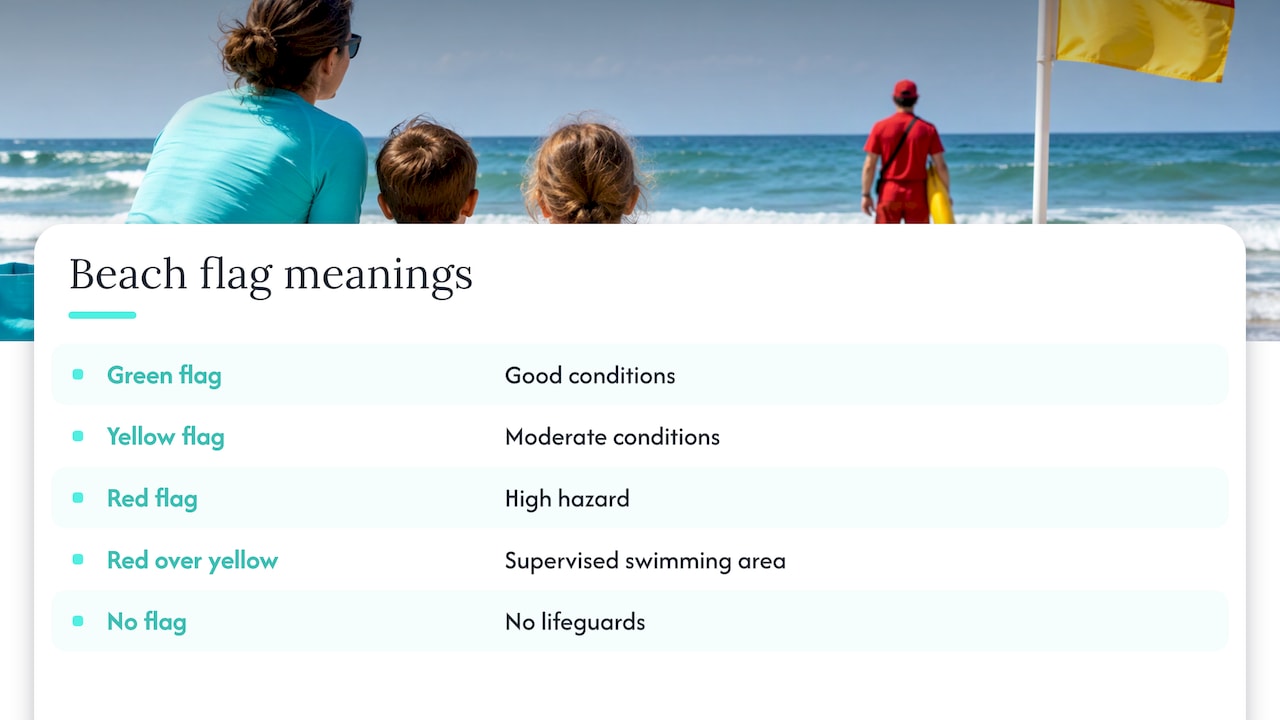
Know the flags. Toronto’s guide explains the international system: green means good conditions, yellow moderate, red high hazard, and a red flag over a yellow one marks the supervised swimming area. No flag means no lifeguards. Swim between the flags where they exist.
Skip pool floats in the ocean. Parks Canada notes that loungers, inner tubes and inflatable furniture are not permitted in the park’s ocean water. Children’s swim aids such as water wings or life jackets are allowed only with an adult within arm’s reach. The Global Beach Guide makes the same point: inflatables are toys, not life-saving devices.
Name a water watcher. The same guide recommends assigning one adult whose only job is watching the water, rotating the role so attention stays fresh, with no phone, book or alcohol while on duty. Swimming lessons help, but they do not replace close supervision.
Know what to do in a rip current. Parks Canada’s advice is not to fight it. Swim out of the current and then to shore, or float and signal for help.
Check conditions daily. CoastSmart, a coastal safety resource for British Columbia, advises checking tides and weather every day, facing the ocean when you are near the water, and taking extra care during and after storms, when surge waves are most dangerous. If you are travelling to the Pacific coast, this matters. Tides there move a long way, and a beach that is wide at low tide can look very different a few hours later.
Mind the sun. Toronto’s guidance is SPF 30 or higher, reapplied every two hours and before and after swimming.
Before you leave, write a short note for the adults: which beach, the access point, who is supervising, where the toilets and shade are, the emergency number and how you will get back. About Family Travel recommends this kind of pre-departure plan, because it gives you reasons to change course as well as reasons to go.
Why a private beachfront changes the trip
Public beaches in Canada can be wonderful, but they run on logistics. Parking can cost around $10 to $20 a day, and day-use entry can run $5 to $15 per person, according to True Canadian Finds. Most Canadian beach destinations also fill up fully only about eight to ten weeks a year, so the crowds arrive all at once.
A private beachfront takes a lot of that away. At Qualicum Breeze Resort on Vancouver Island, the beach is part of the property. There is no drive to the shore, no hunt for a parking space and no packing everything for the day. When a child needs a nap, a snack or a dry set of clothes, the suite is a short walk away. That is what we mean when we say it is a different kind of family beach vacation.
It also suits the way children actually play at the sea. Younger kids can spend hours on a quiet shoreline with a bucket. Our guests go beachcombing, dig for clams, pick oysters, build bonfires and watch marine wildlife from the shore. Older kids and teens can take out a kayak. Our activities page lists what is on offer around the resort, and our Qualicum Beach vacation guide covers the wider area.
Parents ask us about privacy as much as about the sand. The resort combines the charm of a country inn with condominium-style living, in an intimate setting with personal service. For a family with a baby or toddler, that quiet matters.
Choosing where to stay with kids
A rental that works for a couple does not always work for a family. AptTraveler’s guide to multi-generational beach trips recommends prioritizing gentle water, easy beach access with minimal stairs, nearby grocery stores and pharmacies, and rentals designed for families rather than couples.
A few things decide whether a stay feels easy:
- A real kitchen. Cooking breakfast for fussy eaters and packing lunches saves money and time. We wrote a separate piece on whether a kitchen is essential for a family beach stay.
- Space. Separate bedrooms mean children can sleep while adults stay up.
- A short walk to the water. The shorter the walk, the more often you will go to the beach.
- Somewhere to unwind. After a day outdoors, an oceanfront hot tub is a treat for the adults.
At Qualicum Breeze you can choose from several types of stay:
| Stay | Good for |
|---|---|
| Oceanfront Duplex Cottage | Families who want cottage-style space on the beach |
| 2 Bedroom Beachfront Suite | A family of four with room to spread out |
| Oceanfront Log Home | Larger groups or several generations together |
| Honeymoon Beachfront Suite | Couples seeking a romantic getaway |
Our guide to beach resort amenities explains what to expect and what to check before you book anywhere, and our oceanfront vacation rental guide goes further on choosing a stay on Vancouver Island.
If you are travelling with extended family, we also host reunions. Details are on our weddings and reunions page.
Beach vacation ideas the whole family will enjoy
Good beach days have a rhythm: something active in the morning, a long quiet stretch in the middle and something warm in the evening. Some ideas for a Vancouver Island stay:
- Beachcombing and tide watching. Children love turning over shells and watching what the water leaves behind. CoastSmart suggests observing tidal pools at low tide, which works well as a morning outing, as long as you check the tide table first and keep children within arm’s reach.
- Clam digging and oyster picking. Our guests do both on the shoreline, and it turns lunch into an adventure.
- Kayaking. We rent kayaks, so you can paddle along the coast. Sea kayaking is also one of the activities CoastSmart mentions for families on the Pacific coast.
- Marine wildlife viewing. The oceanfront suites give you a view of marine life without leaving the porch.
- Evening bonfires. A fire on the beach is often the part of the trip children remember longest.
- Hiking and golf. Trails and golf courses are nearby, which suits parents and teens who want more than sand.
- Salmon fishing. During salmon runs the resort is popular with anglers, and it makes a good family outing. Our fishing and beach vacation tips and Vancouver Island fishing information will help you plan.
If a parent plays golf, book early. Courses fill quickly in summer, and tee-time systems are built around managing peak tee-time demand, so a morning round is best arranged before you arrive rather than on the day.
When to go
In Canada, the swimming season is short. Destination Canada’s guidance on its best beaches names June to September as the best swimming season. True Canadian Finds adds a useful warning: a warm, sunny day does not mean warm water, and families who arrive in early June often find cold water and some attractions not yet open. The busiest stretch is typically late June through late August.
That gives you two ways to plan:
- Peak summer for the best chance of warm days and open attractions. Book as early as you can.
- Shoulder months for quieter shorelines and more space, with beach play focused on walking, beachcombing and bonfires rather than long swims.
A beach holiday does not have to mean swimming. Many families on Vancouver Island come for the shoreline, the wildlife and the quiet. Check our guide to quiet beachfront vacation rentals if you want to think through the season.
What a family beach vacation costs
Budget before you book. CFMWS, the Canadian Forces’ morale and welfare service, recommends sketching a full trip budget covering travel, accommodation, food, activities, insurance and extras, then adding a 10 to 15 per cent buffer for surprises, especially with children.
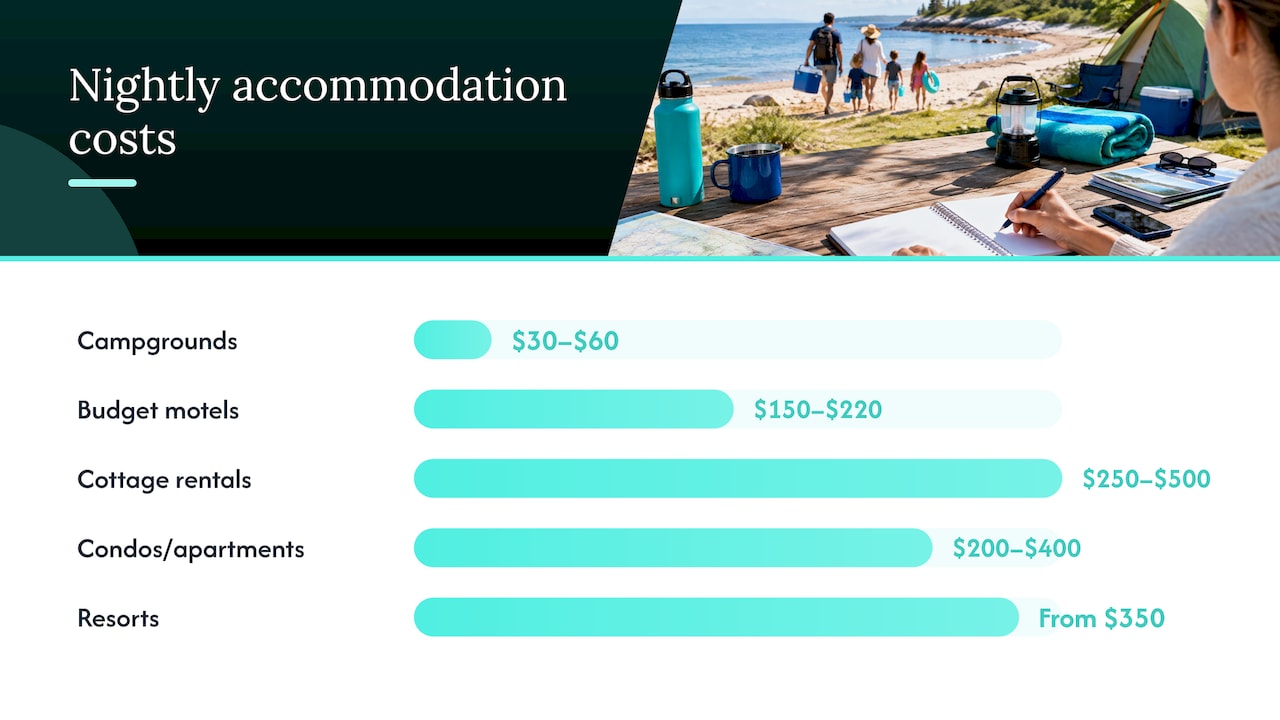
True Canadian Finds gives 2026 peak-season estimates per night: campgrounds $30 to $60, budget motels $150 to $220, cottage rentals $250 to $500 (often with week-long minimums in peak season), condo or apartment rentals $200 to $400, and resorts from $350. These are broad ranges, so use them to set expectations rather than as quotes.
Where you can save:
- Cook some of your meals. A full kitchen is the largest saving on a week away with kids.
- Skip daily fees. Parking and day-use charges add up when you stay at a public beach every day.
- Book early. Money.ca, citing a 2024 Sunwing Travel Trends report, says early booking can save up to 25 per cent on popular resorts, and that travelling midweek can save $100 to $200 per person compared with weekends.
- Save in steps. MoneySense suggests dividing the total into monthly savings goals. For a $10,000 trip that is $833 a month over a year, or $416 a month over two.
If you are planning a longer stay, our two-bedroom suites are offered as monthly rentals from $2,000 per month. See our monthly rentals page. Please note that a 3% charge applies to credit card payments, as set out on our staying at Qualicum Breeze page.
Perspective
A family beach vacation is really about how easy the days feel. Most parents we talk to are not after a long list of attractions. They want to open the door, walk to the water and let the kids play while the adults breathe out.
That is why we built the stay around the shoreline. Our beach is private, so there is no race for a spot on the sand. The suites and log homes have kitchen options, so lunch is never a production. The oceanfront hot tubs are there for the evening, when the little ones are asleep and the tide is going out.
What we love most is watching children discover the beach for themselves: a handful of shells, a kayak ride, a bonfire after dinner, a seal or a bird out on the water. Those small moments are what families take home. If you want a trip that feels unhurried, with country inn warmth and the comfort of your own space, that is exactly what we offer.
Carolyn
Plan your stay at Qualicum Breeze
If you are ready to turn a family beach vacation into dates on the calendar, we would love to host you. Qualicum Breeze Resort is a beachfront stay on Vancouver Island with private beach access, oceanfront hot tubs, kayak rentals and your choice of suites, an oceanfront duplex cottage or a log home. Start with our Oceanfront Duplex Cottage, or visit qualicumbreezeresort.com to see every option and reserve online.
We are also centrally placed for exploring the island, with hiking trails, golf courses and local attractions nearby, so there is plenty to do on days when you want to leave the beach.
FAQ
What should I look for in a beach for kids?
Look for a gentle, sandy slope into the water, small spilling waves, nearby toilets and shade, and a way to be supervised, whether by lifeguards or by a dedicated adult. A short walk from your accommodation to the water makes a big difference with small children.
When is the best time for a family beach vacation in Canada?
June to September is the best swimming season, and the busiest weeks run from late June to late August. Early June can bring cold water, so shoulder months suit families who care more about beachcombing and quiet than swimming. Book early for July and August.
How close should I stay to children near the water?
Within arm’s reach, always, for young children and non-swimmers. Parks Canada and the City of Toronto both give this advice, and it applies even when lifeguards are on duty. Assign one adult as the water watcher and rotate the role.
Is a vacation rental better than a hotel for a family beach trip?
Most families find a rental or suite more practical, because a kitchen, separate bedrooms and extra space make daily routines easier. At Qualicum Breeze you can choose a suite, an oceanfront duplex cottage or a log home, each right on the beachfront.
What can children do at Qualicum Breeze besides swim?
Children can go beachcombing, dig for clams, pick oysters, ride in a kayak, watch marine wildlife and gather round a beach bonfire. Nearby hiking trails and golf courses give the rest of the family more to enjoy.
Sources
- Where Are Canada’s Best Beaches? Destination Canada
- Water safety, Prince Edward Island National Park, Parks Canada
- Beach Safety, City of Toronto
- Family Beach Time, CoastSmart
- Family Beach Safety Handbook, Global Beach Guide
- Best family beaches planning guide, BeachFinder
- Planning a family beach day, About Family Travel
- Multi-generational beach vacation, AptTraveler
- Five Family-Friendly Beach Vacations in Canada, True Canadian Finds
- Vacation mode: how to plan a trip without breaking the bank, CFMWS
- How Canadians save big on dream vacations, Money.ca
- Affordable family vacations, MoneySense
- Managing Peak Tee-Time Demand at a Golf Club, BallChute
